More households will be helped to save money on bills through plug-in solar panels as the government vows to go further and faster on clean energy in response to conflict in the Middle East.
The current conflict is yet another reminder that the only route to energy security and sovereignty for the UK is to end dependence on fossil fuel markets and accelerate the drive for clean, homegrown power, as well as new renewables and nuclear.
Already the government has taken significant steps in speeding up the move to clean energy in response to the conflict. Last week, the government’s annual renewables auction was brought forward to July. The most recent auction was the biggest ever and alongside the previous auction, enough clean energy to power 23 million homes has been confirmed.
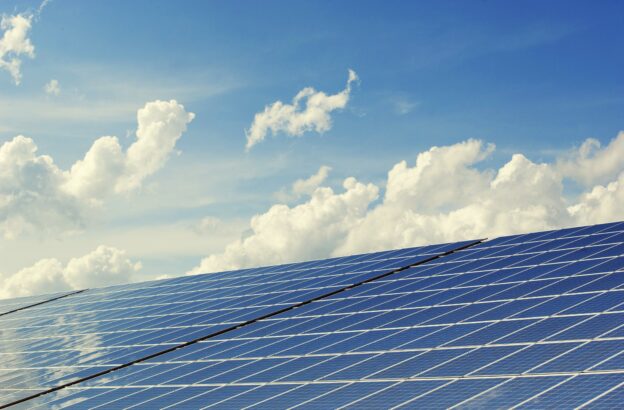
Today, the government is driving forward with the rollout of “plug-in” solar panels (low-cost panels that families can put on their balconies or outdoor space) to be available in shops within months and save people money on their bills.
Retailers like Lidl and Amazon, alongside manufacturers such as EcoFlow, are working with government to enable them to be brought to the UK market.
Plug-in solar is already widely used by households across Europe, with Germany seeing around half a million new devices plugged in per year.
The free solar power can be used directly through a mains socket like any other device, without an installation cost, thereby reducing the amount of electricity taken from the grid and cutting energy bills.
The easy-to-install technology could save many households significant amounts on their energy bills and help make the UK less reliant on global fossil fuel markets.
The government has taken decisive action in response to the conflict in the Middle East to fight for consumers and businesses on the cost of living, and is speeding up plans for more clean, homegrown energy that the UK controls to ensure energy sovereignty and security.
This is alongside new rules coming into force today implementing the Future Homes Standard, which includes common-sense measures to ensure the majority of new homes are built cheaper to run, with solar panels and clean heating as standard.
These measures on new homes could save families up to £830 a year on their energy bills, compared to a standard home with an EPC rating of C. This will ensure they are more comfortable and affordable – and create at least 75% less carbon emissions than those built to the 2013 standards.
Energy Secretary Ed Miliband said:
The government is determined to fight people’s corner in this crisis, which is why we have acted to prevent unfair practices like price gouging and provided immediate help for the most vulnerable facing spiralling heating oil prices.
The Iran War has once again shown our drive for clean power is essential for our energy security so we can escape the grip of fossil fuel markets we don’t control.
Whether through solar panels fitted as standard on new homes or making it possible for people to purchase plug-in solar in shops, we are determined to roll out clean power so we can give our country energy sovereignty.
Housing Secretary Steve Reed said:
Building 1.5 million new homes also means building high-quality homes that are cheaper to run and warmer to live in.
As we make the switch to clean, homegrown energy, today’s standard is what the future of housing can and should look like. Not only will these changes protect hardworking families from shocks abroad but will also slash hundreds of pounds off their energy bills every year.
The government is also announcing and innovative new approach, predominantly benefiting Scotland and East of England, and launching in time for this winter, enabling energy companies to offer discounted energy bills to customers on windy days, rather than continuing the previous default practice of paying wind turbines to turn off.
Historic underinvestment in Britain’s electricity grid means wind farms in these areas are being paid to switch off on windy days when the network cannot carry all the clean power they produce. Government will look to bring forward new legislation to ensure more homegrown, clean energy can be passed on as discounted electricity to consumers during these periods.
Future Homes Standard
- The Future Homes Standard turns the page on over a decade of failure by previous governments. More than a million homes were built with higher bills following the cancellation of the Zero Carbon Homes standard in 2015 – leaving families exposed to the energy price spike after Russia’s invasion of Ukraine.
- today we are laying the regulations for the Standard and publishing its details
- it will put energy in the hands of the British people and help cut bills for good, protecting against fossil fuel price spikes like those triggered by the conflict in Iran
“Discounted energy”
- At the moment, wind farms are often paid to switch off on windy days, because the system can’t use all the power being generated, due to historic underinvestment in the grid required to match this supply with demand across the country
- to tackle these so-called “constraint payments”, we are launching a new, innovative trial, which would mean that using the generated power would become a more cost-effective option compared to turning turbines off
- this will enable suppliers and flexibility service providers to offer households and businesses in areas with constrained renewable generation discounted power during these periods, so that more of the extra electricity can be used rather than wasted. It will predominantly apply to areas in Scotland and the East of England
And it comes ahead of households across the country seeing a significant cut to their energy bills next week, with a £117 reduction coming into effect on 1 April, which will be in place until the end of June, saving families money for years to come, whatever the international situation.
Georgina Hall, Corporate Affairs Director at Lidl GB said:
At Lidl GB, we are committed to making sustainable living affordable for everyone and we welcome the government’s move to modernise regulations in the UK. Updating the regulatory landscape for this ‘plug-and-play’ technology is a positive step towards empowering British households to manage their energy costs and support the nation’s net-zero ambitions.
Greg Jackson, Founder and CEO of Octopus Energy, said:
People want to be free of these fossil fuel crises – since the conflict in the Middle East began, interest in solar has shot up 50%, heat pump and electric cars are also seeing surges.
Every solar panel, heat pump and battery cuts bills and boosts Britain’s energy independence. And the government’s latest steps can help cut the costs of electrification.
With solar, many homes can produce and use their own electricity, and cut their bills further by selling the excess back to us. With heat pumps and electric cars, their own electricity can slash heating and driving bills – stuff you simply can’t do with gas and petrol.
And it’s great that the government want to give homes and businesses cheap electricity on windy days instead of paying wind farms to switch off. Once this is permanent, companies and families will be able to invest confidently in electric vehicles, batteries and heat pumps – knowing they’ll be cheap to run.
Chris Norbury, Chief Executive of E.ON UK said:
Cutting red tape on plug-in solar is an encouraging move and we will help ensure it works alongside, or as part of, whole-home solutions that genuinely empower people to take control of their energy use and cut bills.
At E.ON Next, we’re already seeing how powerful that shift can be. Whether it’s giving customers more control through innovative time of use tariffs or helping people get income from generating and storing energy at home via steerable assets, the direction is clear: simplicity, transparency and providing real financial rewards for doing the right thing.
Pair that with future homes built to a genuinely modern standard that prioritise affordable living and you start to build a system that works with and for people, not around them. The opportunity now is scale and simplicity. If we get that right, this isn’t just policy, it’s progress. It’s how we make new energy work – for everyone.
Chris O’Shea, CEO, Centrica, said:
As the UK’s biggest installer of low‑carbon heating, we welcome today’s announcements, including the Future Homes Standard. It’s a chance to ensure new homes come ready for the full benefits of modern energy systems — where low‑carbon heating, solar and smart technology are designed to work together from the start and reduce energy consumption. Our army of engineers stand ready to continue to keep Britain’s homes warm.
Josh Buckland, Strategy & Policy Director, EDF, said:
Electrification is fundamental to future proofing the country with homegrown electricity putting Britain back in charge of its destiny and helping keeping bills low for all in the long term. This is why we welcome the government’s Future Homes Standard and the decision that all new homes will have clean heating as standard. We are also pleased to see the focus on unlocking further investment in solar, offering customers a practical way to reduce both their bills and their impact on the environment.
Dhara Vyas, Energy UK’s chief executive, said:
The Future Homes Standard is a landmark moment for clean energy in Britain. New homes built under this standard will benefit from clean heating solutions and solar, protecting households from volatile gas prices and putting energy security within the home itself.
Combined with higher fabric efficiency standards, these homes will be warmer and cheaper to run – offering real and tangible change in people’s homes.
Critically, plans for rooftop solar with the possibility for households to export excess energy back to the grid mark a genuine shift in how people can engage with the energy transition, easily allowing them to save money from an increasingly flexible energy system.
The Future Homes Standard gives businesses the long-term certainty they need to invest in manufacturing, scale up supply chains, and build the skilled workforce that will make the targets set in the Warm Homes Plan a reality.
Chris Hewett, Chief Executive, Solar Energy UK, said:
Expanding solar energy and battery storage is a rapid and inexpensive solution to the looming energy crisis – for cutting bills, for the economy and for our nation’s energy security. From the largest installations to the smallest domestic systems, every battery and panel counts towards weaning us off reliance on imported and polluting fossil fuels. That’s why ensuring that new homes and other buildings are built with solar and boosting retrofits is so vital, and so welcome.
Charlotte Lee, Chief Executive, HPA UK, said:
We are delighted to get confirmation that following a transition period, all new homes and buildings will benefit from low carbon heating such as heat pumps and heat networks. Coupled with solar PV, heat pumps and connections to heat networks provide a future proofed solution which will strengthen the UK’s energy security.
Whilst the sector has been scaling up, with over a quarter of new homes built in the UK in 2025 having a heat pump, this clarity will unlock further investment into the supply chain, supporting thousands of highly skilled jobs, and contribute to the UK’s wider economic growth.
Dave Sowden, Chief Executive, Sustainable Energy Association (SEA), said:
We are delighted to see the publication of the Future Homes and Buildings Standard, which will provide much needed clarity for the low carbon heating and energy efficiency sectors. Today’s news will mean that the UK’s future building stock will provide residents with warm, comfortable, efficient, and cost-effective homes for decades to come.
Additionally, it is encouraging to see the government recognise exciting low carbon innovations such as plug-in solar. The technology will be welcomed by consumers and businesses as we navigate the uncertain long-term impact on fuel bills due to a range of geopolitical factors.
Madeleine Gabriel, director of sustainable future at Nesta, said:
Many households are understandably concerned about paying for rising energy costs in the future because of the volatility of fossil fuel prices. With the government now making it even easier to switch to electricity to heat and power your home, there has never been a better time for people to consider installing solar panels, storage batteries and heat pumps.
These home upgrades could save a typical household hundreds of pounds on its annual energy bill under current and projected energy prices and allow households to have some relief from the fossil fuel rollercoaster. Ensuring new homes have heat pumps from 2028 will also lock in that protection for future buyers.
Friends of the Earth’s head of policy, Mike Childs, said:
For too long households across the UK have been hit by soaring energy bills driven by our dependence on volatile gas and oil markets.
Making it easier to install plug-in solar panels and ensuring new homes come with heat pumps and solar power is a welcome step that will help protect families from future price shocks.
But we must go further to end our reliance on fossil fuels, strengthen energy security and cut the carbon pollution driving the climate crisis. That means rapidly expanding the UK’s huge renewable energy potential and helping more people switch to electric heating and vehicles.
Aldersgate Group’s Executive Director, Rachel Solomon Williams, said:
The built environment is one of the most challenging sectors to decarbonise. Including indirect emissions, buildings still account for 23% of the UK’s total carbon emissions. Measures that require homes and commercial buildings to include low-carbon heating and energy efficiency would play an important role in driving the transition.
To ensure that these measures also contribute to reduced bills for households and businesses, it will be vital to continue work on addressing the rising cost of electricity.
Garry Felgate, CEO of The MCS Foundation, said:
The confirmation that the majority of all new homes in England will have solar panels and low carbon heating systems such as heat pumps is very good news – for energy security, for the UK’s progress toward a carbon-free future, and for the countless households that will benefit as a result.
What matters now is implementation, and ensuring households have confidence in the technologies their new home will come with. So, it’s vital that housebuilders consider quality and consumer protection, by ensuring every installation is delivered by an MCS certified installer, to MCS standards.
Janine Michael, Chief executive at the Centre for Sustainable Energy said:
The Future Homes Standard is a significant step forward in futureproofing our homes and our energy system. Building solar and low carbon heating into new builds as standard will create jobs, strengthen energy security and cut household bills, accelerating the green transition.
We also welcome plans to improve access to a wider range of smart tariffs for households generating their own electricity. But the benefits must reach everyone. In particular, it must be easier for lower income and vulnerable households who have had solar panels installed through government-backed schemes to earn income as generators.
Elli Moody, Director of Policy and Advocacy at the Campaign to Protect Rural England, said:
This announcement shows that the government is serious about harnessing the enormous potential of the UK’s rooftops to generate clean, sustainable energy. Mandating solar panels on new homes and making solar more accessible to renters as well as homeowners will deliver meaningful climate action without placing further pressure on iconic landscapes and productive farmland.
Ed Lockhart, Chief Executive of the Future Homes Hub, said:
The publication of the Future Homes Standard isn’t just about a change in regulation – it’s a promise to consumers that new homes will be more comfortable, more efficient, and more secure against the volatility of unstable fossil fuel markets.
Today’s announcement sets the timeline for all new homes to meet these higher standards from 2028. The Future Homes Hub is facilitating partnership across the whole housing ecosystem including sharing solutions between homebuilders, housing associations and developers of all sizes to ensure residents feel the full benefits, starting with the Future Homes Standard Ready campaign.
Dr Tom Dollard, Chair, Good Homes Alliance said:
The Good Homes Alliance welcomes the launch of the Future Homes and Building Standard as a positive step towards net zero and low energy homes. This is a clear improvement for Part L of the building regulations that set targets to ensure all new homes and buildings are built fit for a net zero future, with low carbon heating and solar panels.
Our industry-leading membership will continue delivering these homes that are more comfortable and cheaper to run. We welcome the proposed used of HEM as a replacement for SAP after a period of dual running and look forward to working with industry to ensure these new low energy homes are delivered as comfortable, healthy homes.
We are confident that these standards, especially if used in combination with enhanced ventilation commissioning and low-cost, post-completion testing, such as short duration whole-house heat loss tests, will ensure delivery of both high-quality, energy-efficient homes and the housing supply needed to meet demand.
Lorna Wallace-Smith, Head of UK Communications for EcoFlow, said:
Allowing plug-and-play solar is a very positive step for expanding access to renewable energy in the UK. Seeing these systems available in stores by summer would be a major win for households, enabling people to take advantage of the longer, brighter days and start generating their own clean electricity straight away.
For many households – particularly those living in flats or rented homes – solar has not always been straightforward. Plug-and-play systems remove that barrier, making it far easier to get started.
Across Europe, similar technologies are already widely used, helping households reduce energy bills while supporting a more resilient, decentralised energy system. Solutions such as EcoFlow STREAM show how people can generate solar power from small outdoor spaces like balconies, gardens or terraces, without complex installation. With clear standards and the right regulatory framework, the UK now has a real opportunity to bring accessible solar to millions more homes – just in time for summer.
James Alexander, CEO, UK Sustainable Investment and Finance Association said:
Investors will welcome government plans to place low-carbon efficiency measures at the heart of new building regulations.
Well-implemented guidelines that raise the overall quality and sustainability of new properties can attract billions in private investment, support thousands of skilled jobs and contribute to wider economic growth.
This can also potentially reduce long-term risks for mortgage holders, as it will help to safeguard the valuations of their homes.
Lawrence Slade, Chief Executive, Energy Networks Association, which represents the UK’s electricity network operators said:
Today is a significant step in the UK’s clean energy transition and in supporting the connection of additional home-grown solar power. The UK energy system is already an international leader in the delivery of local flexibility markets, and we’re keen to enable customers to safely and appropriately accelerate the connection of domestic renewable generation.
Network operators are investing to create an energy grid that will meet the UK’s future demands for clean, affordable and secure energy. This will enable the transition to the greater use of low carbon technologies (LCTs) which they are also supporting by practical innovations like ENA’s Connect Direct service, to make the connection of more LCTs as straight forward, quick and safe as possible for customers.
Charlie Mercer, Policy Director at Startup Coalition, said:
Today marks another excellent step forward in placing innovation and cutting-edge technologies at the heart of the UK’s energy security agenda. It’s clear the government is serious about putting tech into the hands of households across the UK to cut energy bills. The UK is home to a £22 billion energy startup sector that will drive forward energy security and economic growth across the country.
Mohamed Gaafar, Co-Founder and CEO, Gryd Energy, said:
This is a landmark moment that will redefine the role of homes in the UK’s energy system.
Solar on every new home is an absolute no-brainer – it will give households real control over their bills and reduce their exposure to volatile global energy markets, something recent events have made impossible to ignore.
At Gryd, we’re already delivering funded solar and battery systems on new homes with our developer partners, giving buyers the flexibility to own if it suits their budget. The early results speak for themselves: when clean energy is made accessible and affordable from day one, homebuyers choose it.
The Future Homes Standard is meeting homeowners where they already are – the public demand is clear to accelerate the UK’s move to a more decentralised, resilient energy system – and the industry is ready to step up and deliver.
Simon McWhirter, CEO at the UK Green Building Council, said:
We welcome the government’s decision to adopt the more ambitious Future Homes Standard, putting new homes firmly on a path away from fossil fuels and ensuring rooftop solar and improved levels of energy efficiency are the new norm. This will help lower household energy bills, reduce pressure on the electricity system, and give industry the confidence to invest in skills, supply chains and innovation.